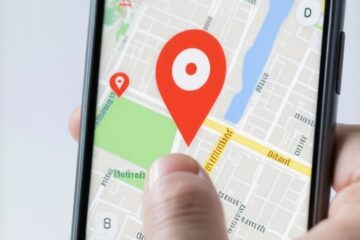
Why Your Shop’s Map Pin Only Shows Up for People Standing in Your Lobby
The “Lobby-Only” Visibility Crisis: When Your SEO Stops at the Front Door
It is a scenario I see play out with Detroit business owners almost every week. You are sitting at your desk in Corktown or Midtown, you pull out your phone, and you search for your primary service. There you are: Number one in the Google Map Pack. You feel a surge of pride. Your google business profile seo efforts seem to be paying off.
Then, you leave for lunch. You drive three miles down Woodward Avenue, pull over, and run the same search. Suddenly, your business is nowhere to be found. You’ve been replaced by a competitor who, quite frankly, has half your reviews and a website from 2008. You haven’t just dropped to position two or three; you have completely vanished from the top results. This is the “Proximity Trap.”
The Proximity Trap is the phenomenon where a Google Business Profile (GBP) only ranks in a hyper-localized radius – sometimes as small as a few hundred feet – around the physical business address. According to Google Support and research from PriceWeber, proximity remains one of the most significant ranking factors in local search. However, for a business looking to capture customers across the Detroit metro area, “lobby-only” visibility is a recipe for stagnation. If you want to rank google business profile results across entire zip codes, you have to understand that proximity is a hurdle, not a dead end.
The Science of the Map Pack: Understanding the Three Pillars
Google’s local algorithm isn’t a mystery; it’s a calculation based on three specific pillars. To break the Proximity Trap, you must understand how these three forces interact. If you are struggling with a tiny visibility radius, it is likely because your “Distance” factor is overshadowing your “Relevance” and “Prominence.”
- Relevance: This is how well a local business profile matches what someone is searching for. If your profile is vague, Google won’t risk showing you to a searcher, even if they are standing on your welcome mat.
- Distance (Proximity): This is the physical distance between the searcher (or the location specified in the search) and your business. This is the hardest factor to “fix” because, short of moving your office, your coordinates are fixed.
- Prominence: This refers to how well-known or important a business is. This is based on information that Google has about a business from across the web, like links, articles, and directories.
The secret to expanding your reach is using Relevance and Prominence to “overpower” the Distance factor. When Google views your business as the undisputed authority for a service in Michigan, it will extend your ranking radius further to ensure the user gets the best result, not just the closest one. For a deeper dive into these mechanics, check out our guide on how to Fix Your Detroit Map Radius: 3 Proximity Tactics for 2026.
Why Proximity is a “Double-Edged Sword”
Google prioritizes proximity because it wants to provide the most convenient solution for the user. If I’m looking for a “coffee shop near me,” I don’t want a world-class cafe ten miles away; I want a decent latte within walking distance. However, for service-based businesses like plumbers, lawyers, or roofers, this logic fails. You don’t care if your plumber is next door; you care if they can get to your house and fix the leak.
Recent findings on the Local Search Forum and Reddit highlight how volatile this factor can be. For instance, many businesses find that changing their primary address – even by a few blocks – can “reset” their local rankings, often for the worse, as Google re-evaluates the new proximity landscape. Furthermore, there is the “After Hours Drop.” Research from Facebook and various SEO analysts shows that many profiles see their visibility radius shrink or disappear entirely the moment the business marked “hours of operation” end for the day. If you aren’t using a google maps rank tracker to monitor your visibility 24/7, you might be missing the fact that you only “exist” on the map from 9 AM to 5 PM.
This proximity bias creates a “winner-take-all” environment for the immediate neighborhood but leaves the rest of the city up for grabs. To compete, you must shift your strategy from being the “closest” to being the “most authoritative.”
Expanding Your Radius: Tactics to Move Beyond the Front Door
If you want to rank higher on google maps in Ferndale while your office is in Royal Oak, you need to prove to Google that your business is highly relevant to that specific area. You cannot rely on your physical address alone to do the heavy lifting.
1. Hyperlocal Content Clusters
Google’s crawlers look at your website to understand the geographic scope of your business. If your website only mentions your office address, Google assumes that is the only place you serve. Create “Service Area” pages that aren’t just boilerplate text. Mention local landmarks, Detroit-specific neighborhoods like Grandmont Rosedale or East English Village, and discuss specific projects you’ve completed in those areas. This builds “Relevance” for those locations.
2. Service Area Business (SAB) Optimization
There is a long-standing debate about whether hiding your address (designating yourself as an SAB) helps or hurts. While showing a physical address generally provides a stronger “trust signal,” SABs can define their service areas by zip code or city. The key is consistency. If you are an SAB, ensure your service areas in your GBP dashboard perfectly align with the areas mentioned on your website. For more on this, read Detroit SEO: Why Your Maps Pin Stops at the City Line [2026 Fix].
3. Localized Backlink Profiles
Most local seo services focus on general citations, but to expand your radius, you need local relevance. A link from a Detroit-based neighborhood blog or a sponsorship of a Little League team in a neighboring suburb carries more “proximity weight” than a high-authority link from a national site. These links signal to Google that your business is an active participant in the wider community, allowing your pin to show up further from your lobby.
Technical Fixes: Schema, Citations, and the Power of Reviews
To truly improve google maps ranking, you have to speak Google’s language. This is where technical SEO meets local brand building. If your technical foundation is weak, your proximity radius will always be capped.
The Role of Local Business Schema
Schema markup is a piece of code you add to your website to help search engines understand specific data. For local businesses, “LocalBusiness” and “PostalAddress” schema are non-negotiable. By clearly defining your `areaServed` property within your schema, you provide a structured roadmap for Google to follow. Learn How Proper Schema Fixes Michigan Map Pins That Never Show Up to ensure your backend is working as hard as your front end.
Review Velocity and “Video Proof”
Prominence is heavily driven by reviews. However, it’s not just the number of reviews that matters – it’s the content and the location of the reviewer. Google’s AI can now detect if a reviewer is actually in the area they claim to be. Encouraging customers to upload photos or even short videos with their reviews provides “Video Proof” that Google’s algorithm values highly. Using google business profile optimization strategies like “Google Review Standees” with QR codes in your shop can increase your review velocity, which is a major signal for expanding your ranking radius. If you’re looking for professional help with this, a google maps ranking service can help automate and track these signals.
NAP Consistency and the Citation Myth
We used to say that citations (Name, Address, Phone) were the most important part of local SEO. In 2026, they are the “ante” to get into the game. If your NAP is inconsistent across the web, Google loses trust in your location data. If Google isn’t 100% sure where you are, it won’t show you to anyone – not even the person standing in your lobby. Use local seo tools to audit your citations and ensure every mention of your business across the web is identical.
Looking Ahead: The 2026 Google Maps Update and AI Search
The landscape of local search is shifting. With the “2026 Winter Update” and the rise of AI-driven voice search (like Gemini and GPT-powered assistants), the way “proximity” is calculated is changing. AI search doesn’t just look for the closest business; it looks for the best business that can realistically fulfill the request. This means “Prominence” is becoming the dominant pillar.
As voice search becomes the primary way people find local services while driving or at home, Google is placing more weight on brand authority and conversational relevance. If your business is frequently mentioned in local Detroit news or has a high volume of “unbranded” searches (people searching for your business name specifically), your radius will naturally expand. You might find that Why Your Detroit Map Pin Only Shows Up in One Zip Code [2026] is a problem of the past if you focus on building a brand rather than just a map pin.
In this new era, the “Proximity Trap” will be even tighter for low-authority businesses, but it will be almost non-existent for those who have invested in high-level google business profile ranking strategies. The goal is to be the answer to the AI’s question, regardless of whether the user is in Dearborn, Troy, or downtown Detroit.
Conclusion: Proximity Isn’t Destiny
If your shop’s map pin only shows up for people standing in your lobby, it’s a sign that Google doesn’t yet trust your business enough to “stretch” your relevance. Proximity is a powerful factor, but it isn’t destiny. By focusing on hyperlocal content, technical schema, and aggressive prominence building, you can break out of your immediate block and start capturing leads from across the city.
Don’t let your competitors own the suburbs just because they are a mile closer. It’s time to audit your reach. I highly recommend using local seo software or a dedicated google maps rank tracker like SEO Viper Tools to see your true “grid rank.” Only when you see the heat map of your current visibility can you begin the work of expanding it. Stop being a local secret – start being a Detroit landmark.