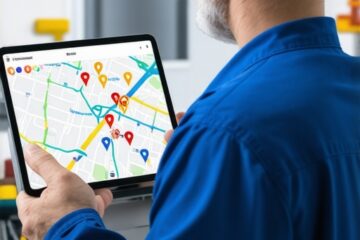
I remember sitting in my small office near Midtown back in 2019, staring at a twenty-page PDF report from a big-name agency that cost me a fortune. The charts were a beautiful shade of emerald green, the ‘keyword rankings’ were all moving upward, and according to their data, I was supposedly ‘dominating’ the local market. But there was a massive problem. My phone was dead silent. I walked out to my truck, drove two blocks down Woodward, and searched for my own services on my phone. I didn’t even show up in the top ten. That was the moment I realized I was being sold a bill of goods, and it’s a trap I see too many neighbors falling into today.
The Day I Realized My Glossy SEO Reports Were Total Fiction
When I first started trying to figure out Detroit SEO success, I made the classic rookie mistake of trusting ‘impressions’ and ‘keyword positions’ over actual foot traffic. I spent months bragging about being #1 for phrases that nobody was actually typing into a search bar with the intent to buy. It’s a gut-wrenching feeling to realize you’ve been paying for vanity instead of value. Most red flags to watch for before hiring a Michigan SEO agency start with a report that focuses on how many times your name ‘appeared’ rather than how many people actually clicked the ‘call’ button. Today, I want to help you cut through that noise and demand the kind of transparency that actually puts money in your bank account.
Does a high ranking really mean more customers for your Detroit shop?
Not necessarily. A report can show you are ‘ranking’ for a term in a neighborhood three towns over where you don’t even work, while you remain completely invisible to the guy standing on the corner of your own block. It is a phenomenon where GMB analytics are probably lying to you because they count every time a bot crawls your page as a ‘view.’ In fact, a study by BrightLocal found that while 87% of consumers use Google to evaluate local businesses, a huge chunk of reported ‘map views’ are actually just drive-by data points that never had a chance of converting. Have you ever looked at a monthly marketing report and felt like the numbers just didn’t match the reality of your empty waiting room? We need to talk about how to measure local SEO results without getting fooled, because the truth is that the only metric that matters is whether your local visibility is actually driving calls and clicks from real people in Detroit.When you’re trying to dominate the local scene, you have to treat your Google Business Profile like a high-stakes digital storefront, not a static yellow pages ad. One of the biggest hurdles I’ve seen is the ‘proximity filter.’ I once worked with a landscaper whose shop was technically in a Detroit suburb, but he wanted jobs in the city. Because his map pin was slightly ‘drifting’—a common technical glitch—Google thought he was actually based in an abandoned lot three miles away. We spent two weeks arguing with support just to get his location verified correctly.
Stop Your Map Pin From Wandering Off Woodward
You’ve probably noticed that why your Detroit map rank changes every two blocks on Woodward Avenue is often due to how Google interprets your physical center. If your pin isn’t pinned down to the exact inch, you’re losing calls. Think of your map pin as a lighthouse; if the light is even slightly out of alignment, the ships (your customers) are going to crash into your competitors. You need to log into your dashboard and manually check your latitude and longitude. It sounds tedious, but the small tweak that finally connects your Michigan shop to local phone calls often starts with ensuring your physical location is undeniable to the algorithm. 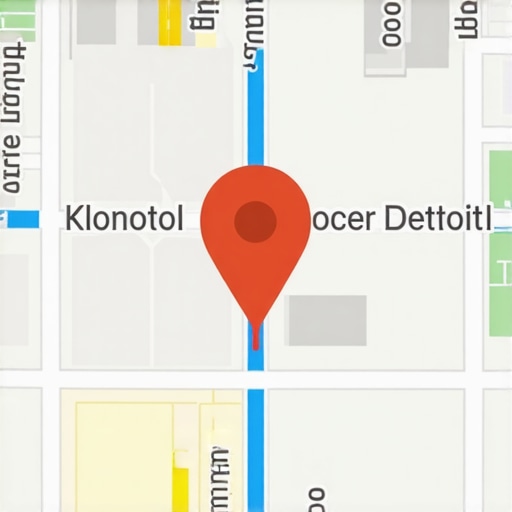
Force Google to See Your Real Service Area
If you aren’t a brick-and-mortar shop where people walk in, you’re likely struggling with the ‘service area’ trap. Most guys just check a box for ‘Detroit’ and hope for the best. That’s a mistake. To really win, you have to prove your presence through local signals. I remember a plumber in Royal Oak who couldn’t get a single call from Ferndale, even though he lived on the border. The problem? His website never mentioned specific landmarks. We started building out content that referenced local parks and intersections, and suddenly, he wasn’t just a ‘plumber’—he was the ‘local’ plumber. This is why learning how to create Detroit city pages that actually rank and convert is the difference between a busy crew and a quiet phone.
The Consistency Fix That Ends the Search Game
Google is essentially a giant, paranoid librarian. If your name is ‘Detroit Auto Repair’ on your site but ‘Detroit Auto Repair, LLC’ on a random directory, the librarian gets confused and hides your book. I’ve seen businesses plummet in rank just because they used ‘St.’ in one place and ‘Street’ in another. It seems trivial, but you have to how to fix mismatched business details that confuse Detroit search results if you want to maintain Michigan maps visibility mastery.
Make Your Reviews Work Harder Than a Five-Star Badge
We all want that five-star average, but the text inside the review is what actually moves the needle. When a customer says ‘Great service,’ it helps your reputation but does nothing for your SEO. When they say ‘The best brake repair in Corktown near Michigan Ave,’ Google’s ears perk up. I started using the review request strategy that actually gets Detroit customers to respond by simply asking them to mention what neighborhood they were in. It felt awkward at first, like asking for a favor after they already paid me, but the results were undeniable. Within a month, my client was showing up for neighborhood-specific searches they hadn’t touched in years.Most of the ‘gurus’ out there will tell you that the secret to winning the local map pack is simply to collect as many five-star reviews as possible. But I’m going to tell you something that might sting: I’ve seen shops in Royal Oak and downtown Detroit get absolutely crushed by competitors who have half the reviews and zero ‘prestige.’ The truth is that your Michigan competitors rank higher with fewer reviews because Google values the *relevance* of the reviewer’s location and the *velocity* of the feedback more than the total number. If all your reviews came in a single burst three years ago, Google sees your business as a relic, not a relevant local solution. Have you ever fallen into this trap where you worked your tail off for a high rating only to stay stuck on page two? Let me know in the comments, because you aren’t alone in that frustration.
Why Your Review Count Might Actually Be Hurting You
The biggest mistake I see is ‘Review Stagnation.’ Business owners get to a 4.8 rating and then stop asking. In the Detroit market, search behavior is incredibly localized. According to the annual Local Search Ranking Factors survey by Whitespark, ‘behavioral signals’ like click-through rates and recent check-ins are now more important than ever. If Google doesn’t see a steady stream of new, neighborhood-specific mentions, it assumes you’ve closed shop or lost your touch. This is why your Michigan local authority is dropping even with good reviews. You need a system that keeps the momentum alive without you having to beg for it every single day.
Why do your competitors with half the reviews still outrank you in Corktown?
It usually comes down to ‘Local Entity Authority.’ If a competitor is regularly mentioned on local Detroit blogs, sponsors neighborhood events, or has their address perfectly synchronized across the web, Google trusts them more than a ‘five-star’ business with messy data. Many owners try to take shortcuts by using automated software that blast their info to hundreds of low-quality directories. This is a massive ‘oops’ factor. These bots often create specific citation mistakes killing your Michigan local search visibility by creating duplicate listings or using slightly different phone numbers. Google sees this inconsistency and immediately devalues your profile because it doesn’t want to risk sending a customer to a dead-end location. 
Stop Chasing Empty Citations That Lead Nowhere
Another nuance people miss is the ‘Proximity Filter.’ You might be the best contractor in the city, but your shops map pin only shows up for people standing in your lobby because you haven’t built out the necessary geographic signals. You cannot just ‘set and forget’ your service area settings. You have to prove to the algorithm that you are active in specific zones like Midtown, East English Village, or Grandmont Rosedale. This is where the local content tactics that actually move the needle for Detroit shops come into play. By focusing on hyper-local content and ensuring your technical backend is flawless, you can stop your Google Business Profile from being filtered out of the very neighborhoods you need to serve. It’s not about being the biggest; it’s about being the most undeniable local choice in the eyes of a very picky algorithm.
Ditch the expensive suites for these local wins
I’ve spent thousands of dollars on enterprise-level SEO software that promised the world but couldn’t tell me why a shop on 8 Mile was outranking me. When you are focused on the Detroit market, you need tools that actually understand geographic nuances. I personally swear by localized rank trackers that show a grid view of the city. Seeing a map of Detroit covered in red or green dots tells you more about your real-world performance than a generic ‘average position’ ever will. If you’re trying to keep costs down, start by looking at the best local SEO tools for Michigan small businesses that don’t require a corporate budget. For my own daily checks, I use a simple browser extension to spoof my location to specific Detroit neighborhoods like Corktown or Brush Park. It is the only way to see what your customers actually see without leaving your desk. 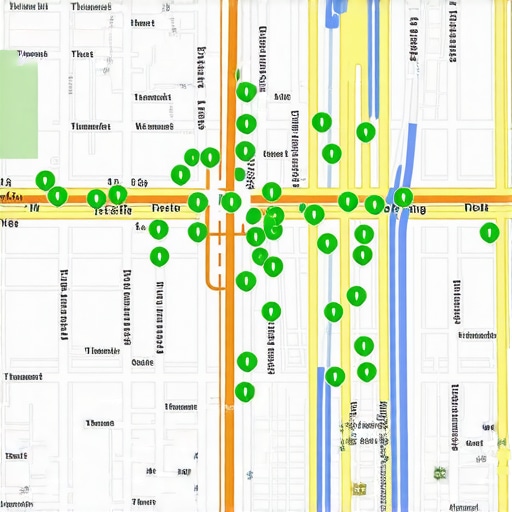
How do I keep my Michigan shop at the top of the pack?
Consistency is the unsexy secret to Michigan maps visibility mastery. You can’t just do a ‘blast’ of SEO and walk away. I treat my Google Business Profile like a social media account. Every Tuesday, I upload a fresh photo of a completed project or a happy customer. Every Friday, I respond to every single review, even the ones without text. Google’s own documentation on ‘How to improve your local ranking’ explicitly states that ‘prominence’—which includes how much information Google has about a business—is a primary ranking factor. This is why you need to how to automate Detroit customer reviews so the feedback loop never breaks. If you stop feeding the algorithm new data, your competitors who are still active will eventually leapfrog you.
The AI-driven shift coming to Detroit search in 2026
Looking ahead, the way we think about Detroit SEO success is about to change radically. Google is leaning heavily into ‘Search Generative Experience’ (SGE), which means the AI will start answering local queries before a user even clicks a website. To survive this, you need to be the business that the AI trusts most. That means having the most detailed service descriptions and a flawless technical backend. You should already be preparing your Detroit shop for the 2026 local search algorithm shift by doubling down on hyper-local expertise that an AI can’t fake. If you want to stay ahead of the curve, try this one advanced tip today: go into your ‘Products’ and ‘Services’ tabs on Google and write 300 words of unique, helpful description for your top three money-making services. Most of your neighbors are too lazy to do this, and it’s an instant authority boost. For those looking to grow even further, there are practical ways to scale your Michigan local SEO without having to hire a team of twenty.
Hard Truths from the Detroit Search Trenches
During my years helping local shops, I’ve realized that the algorithm doesn’t care about your intentions; it only cares about the signals you send. First, remember that a static profile is a dying profile. If you aren’t feeding Google fresh data—like photos of your team at a community event or responses to new reviews—the engine assumes your business is less relevant than the active competitor down the street. Second, proximity is a moving target. I have seen exactly why your Detroit ranking drops the moment a customer crosses the nearest main road, and it usually comes down to a lack of neighborhood-specific content. Finally, stop chasing global keywords. Being #1 for a generic term in Michigan means nothing if you aren’t the first choice for the person standing three blocks away from your door. Focus on the only way to track real local leads in Detroit by looking at actual call data and map directions rather than just search impressions. #IMAGE_PLACEHOLDER_E#
The Local Toolkit I Actually Use Every Day
To stay ahead, you need more than just hope; you need the right gear. I personally recommend using a grid-based rank tracker that shows your visibility neighborhood by neighborhood. This is the only way to see if you are actually winning in Brush Park or losing ground in Corktown. For your technical foundation, I always point people toward a solid Detroit SEO deep dive into your schema markup, which acts as a translator for Google’s AI. I also trust local photography over stock images every single time. A high-quality photo of your storefront on a recognizable Detroit street does more for your ‘local’ authority than a thousand words of generic marketing copy. Lastly, keep a link to the Google Business Profile manager on your phone’s home screen. Treating it like a live social feed instead of a ‘set and forget’ directory is the fastest way to gain an edge.
Claim Your Spot in the Detroit Map Pack
The digital landscape of our city is changing, but that creates a massive opportunity for the business owners who are willing to do the unsexy work of being consistent. You don’t need a fancy agency or a million-dollar budget to unlock Detroit SEO success. You just need to show up for your customers online with the same dedication you show them in person. Start by fixing one address mismatch or uploading three new photos today. Over time, these small tweaks build an unbreakable wall of local authority that even the biggest national brands can’t tear down. It’s your city—make sure Google knows you’re the one running it. Have you noticed your map ranking change significantly when you drive from Midtown toward 8 Mile? Let me know your experience in the comments below!