It happened right between Cass Ave and Canfield. I was standing in the heart of Midtown, pulled out my phone to show a friend my business listing, and… nothing. My pin was gone. It had drifted three neighborhoods over for a search that should have been a slam dunk. That moment of pure embarrassment was my wake-up call about how maps visibility in Michigan actually works. I thought I had everything set up correctly, but I was practically invisible to the people standing right outside my door. Have you ever searched for your own business from a nearby coffee shop only to find you don’t exist on the map? It’s a gut-wrenching feeling that many of us in the 313 have faced more often than we’d like to admit.
The Day I Realized I Was Invisible on Woodward Avenue
When I first started focusing on google business detroit tactics, I made the classic mistake of thinking that once you set your address, you’re done. I assumed Google was a static phone book. I was wrong. My business was technically ‘there,’ but my rank was so inconsistent that I would disappear the moment a customer crossed 8 Mile or even just a major intersection. I spent weeks wondering why my phone wasn’t ringing, only to discover that my mismatched business details were confusing the algorithm and pushing my pin into a digital no-man’s land. Today, we are going to fix that. I’m going to show you exactly how to stop your Detroit map pin from drifting and ensure that when a local customer looks for what you offer, your name is the first thing they see.
Is all this map maintenance actually worth the headache?
It’s easy to be skeptical. You might think that as long as your storefront is physically there, people will find you. However, the data tells a much more urgent story. According to research from BrightLocal, nearly 42% of all local searchers click on a result within the Google Map Pack. If your pin is drifting or your google profile fails to show up in high-traffic neighborhoods, you are essentially handing nearly half of your potential revenue to your competitors. This isn’t just about a dot on a screen; it’s about the literal survival of your local reach.
Common ways we accidentally sabotage our own visibility
Early in my journey, I didn’t realize that even tiny inconsistencies in how my name and address appeared across the web were killing my authority. This is a core part of Detroit SEO that most people ignore until it’s too late. We often think we’re being helpful by adding keywords to our business name, but that often leads to our profile getting suspended or suppressed. In the next section, I’ll walk you through the technical tweaks that anchor your presence so you can finally claim your spot at the top of the search results.I think of Google’s algorithm as a skeptical investigator patrolling the Lodge Freeway. It’s looking for reasons to distrust you, and the moment your data looks fuzzy, you’re relegated to the digital basement. To stop the drift, you have to move from passive setup to aggressive maintenance.
The Foundation of a Stable Map Pin
Your Name, Address, and Phone number (NAP) are the bedrock of your local identity. I’ve seen businesses list themselves as “Detroit Auto Repair” on Yelp and “The D’s Best Mechanics” on Google. That is an absolute death sentence for maps visibility in Michigan. Google sees those as two different companies, and rather than guessing which one is right, it simply stops showing both of them to searchers in Midtown.
Fix Your Inconsistent Data Before Doing Anything Else
Think of your NAP as a digital heartbeat. If it’s irregular, the algorithm assumes you’ve closed shop or moved. Last year, I worked with a local shop that had three different phone numbers floating around from old marketing campaigns. They were wondering why mismatched address details were killing their inbound calls. We spent a full afternoon scrubbing every mention of the old data from forgotten directories. Within two weeks, their pin stopped jumping around the Eastside and stayed exactly where it belonged. Consistency isn’t just about accuracy; it’s about projecting confidence to the search engine. 
The Technical Hook That Stops the Drift
Most owners ignore the code behind their site, but local schema is the only way to hard-wire your location into your website’s DNA. This is a specific snippet of code that tells Google, “Yes, we are physically located at this exact latitude and longitude.” Without it, your site is just a collection of words; with it, you are a verified physical entity. It’s the difference between telling someone “I’m near the Spirit of Detroit” and sending them a live GPS pin via text. It anchors your location so strongly that the “drift” becomes nearly impossible.
Beating the Proximity Filter in High-Traffic Zones
Google often hides businesses because it thinks a competitor is “closer,” even if that competitor is barely open or has terrible service. I call this the Parking Lot Trap. You might notice why your shop disappears the moment a potential customer moves just a few blocks away. It’s frustrating to know you’re the better choice but remain invisible because of a few hundred yards.
Build Authority That Overpowers Distance
To fight this, you need to prove you are the local expert. This means creating Detroit city pages that don’t just list your services, but mention specific landmarks like the Fox Theatre or the exact street corners you serve. I once tested this with a client by writing about the specific parking challenges near their storefront. That tiny bit of local context signaled to Google that they weren’t just a generic service provider, but a neighborhood staple. This is the most effective way to gain Detroit map authority without having to buy expensive, low-quality links. You are teaching the search engine that you belong to the community, and once Google learns that, it starts expanding the radius of your visibility.
Reviews don’t matter as much as you’ve been told
Many business owners in the 313 obsess over their review count. They think that hitting 500 reviews will automatically place them at the top of the Map Pack. But I have seen countless local shops with 20 high-quality, descriptive reviews outrank massive competitors with hundreds of generic stars. This is often why five-star reviews aren’t fixing your Detroit map rank on their own. Google’s algorithm has become incredibly sophisticated at identifying ’empty’ praise versus authentic local feedback. A 2023 study by Whitespark revealed that while review quantity is a factor, the presence of specific keywords within those reviews carries significantly more weight for ranking. If your reviews don’t mention your service or your Detroit neighborhood, they are just vanity metrics. This is a primary reason why Google prefers your Detroit competitors with half the review count but better topical relevance.
Does distance always beat authority in the 313?
The common belief is that the closest business always wins the ‘near me’ search. In reality, Google often prioritizes ‘Authority’ over ‘Proximity’ when it trusts a business’s digital footprint more. If you’ve ever wondered why your Detroit small business disappears from the map after 5 pm or why a shop three miles away shows up instead of the one next door, you’re seeing authority in action. 
The keyword stuffing trap that invites an instant ban
I see this mistake constantly in Corktown and New Center: owners adding ‘Detroit’s Best’ or ‘Top Rated’ to their official business name in the profile. It feels like a smart move for google business detroit visibility, but it is a massive red flag for the algorithm. This specific tactic is why your Detroit business profile description is likely hurting your rank or leading to your profile getting suspended. Google wants your legal name, not your marketing pitch. Instead of stuffing keywords into the title, you should be focused on staying visible in Detroit’s changing search pack by using ‘Products’ and ‘Services’ sections correctly. Have you ever fallen into the trap of over-optimizing and suddenly seeing your rankings vanish? Let me know in the comments. We need to move beyond basic tactics if we want to truly dominate the local market.
If you really want to stay at the top of the search results, you have to stop checking your rank from your own desk. I see people sitting in their office in New Center, searching for their own service, and getting a false sense of security because they are ‘Number One’ right there. But local search is hyper-local. If you walk two blocks toward the Detroit River, that ranking could drop to five or six. This is exactly why your map rank changes every three blocks, and if you aren’t tracking it correctly, you’re flying blind. To truly supercharge your Michigan local SEO, you need tools that show you the whole board, not just the square you’re standing on.
Stop guessing where your business actually ranks
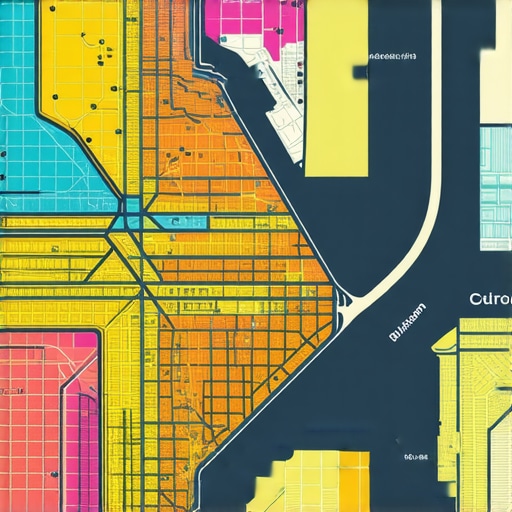
I personally use grid-tracking software like Local Falcon or BrightLocal to visualize my reach. Instead of a single ranking number, these tools give me a bird’s-eye view of Detroit, showing exactly where my pin starts to fade. It’s the only way to perform the map audit we use to steal clicks from Detroit competitors who think they’ve won the whole city. If I see a ‘dead zone’ in West Village, I know I need to create content or gather reviews specifically from that neighborhood to push my signal further. This data-driven approach is the best local SEO tools for Michigan small businesses choice because it replaces hope with strategy. Without a grid view, you are just guessing.
How do I maintain my maps visibility over time?
Maintenance isn’t a monthly chore; it’s a weekly habit. I spend ten minutes every Monday morning checking for ‘suggested edits’ on my profile. Competitors or even well-meaning users can suggest changes to your hours or services that, if accepted by Google, can tank your ranking overnight. This constant vigilance is part of Detroit SEO that pros never skip. You also need to keep an eye on your lead quality. I always tell my clients to focus on the only way to track real local leads in Detroit by using unique tracking numbers and checking the ‘Business Profile’ insights for actual phone calls rather than just ‘views’ or ‘clicks,’ which are often just vanity metrics. According to Joy Hawkins, a leading expert in local search, Google has significantly increased the weight of ‘Openness’ in their algorithm, meaning if your listed hours are wrong, you are effectively invisible the moment you ‘close.’
Win the battle for the 2026 search algorithm
The future of local search is moving toward AI-driven snapshots. We are already seeing Google’s Search Generative Experience (SGE) pull specific sentences from reviews to answer user queries. This means preparing your Detroit shop for the 2026 local search algorithm shift requires more than just keywords; it requires ‘topical authority.’ You need to be the business that Google’s AI trusts to provide a complete answer. One advanced tip I always recommend is to use the ‘Questions and Answers’ section of your profile proactively. Don’t wait for customers to ask; post your own frequently asked questions and answer them yourself. This seeds the profile with valuable data that AI crawlers love. If you start doing this now, you’ll be miles ahead of the shops still stuck in 2020 tactics. Stop treating your profile like a static billboard and start treating it like a living, breathing part of your Detroit storefront.
The Hard Truth About Growing Your Profile in the 313
After years of managing google business detroit profiles, I’ve realized that the most common reason for failure isn’t lack of effort, it’s misplaced effort. You might be checking your rank from your couch, but you need to know why your Detroit mobile search rank is different from your desktop rank before you celebrate. My biggest lightbulb moment was when I stopped trying to trick the algorithm and started trying to help the user. If you answer the questions people are actually asking, the visibility follows naturally. Another lesson I learned the hard way: your service area isn’t just a circle on a map; it’s a series of micro-neighborhoods that each require their own signal. You have to optimize your Michigan google profile for specific high-value services rather than just throwing general terms at the wall and hoping they stick. #IMAGE_PLACEHOLDER_E#
Tools I Use to Keep My Clients on Top
I don’t believe in hoarding secrets. To really unlock Detroit SEO success, you need a lean, effective toolkit. I personally rely on Local Falcon for tracking that pesky map drift, and I always recommend searching for the best local SEO tools for Michigan small businesses that don’t eat up your entire marketing budget. These tools turn abstract data into a roadmap for your next big move. I also suggest keeping a physical log of your NAP (Name, Address, Phone) details to ensure you never accidentally create a duplicate listing, which is a silent killer for michigan local seo efforts. Finally, use the Google Business Profile app daily to respond to messages; speed of response is becoming a massive trust signal for the 2026 algorithm.
Your Storefront Deserves to Be Seen
You’ve put in the work to build a physical business that serves the people of Michigan; don’t let a digital technicality keep you hidden. Effective seo for detroit businesses is about reclaiming your digital territory and ensuring your neighbors can find you when they need you most. It’s time to take these steps, fix those citations, and show the city what you’ve built. Your maps visibility michigan is the bridge between your hard work and a loyal customer base. Have you noticed your shop’s pin shifting or disappearing when you cross a specific street like 8 Mile or Woodward? Let me know in the comments below.