I remember the exact moment I realized I was losing money. It was a cold Tuesday morning in Royal Oak, and I was sitting at a small table with a lukewarm coffee. I decided to search for my own business—not by name, but by what I actually do. I scrolled past the ads. I scrolled past the top three map results. I even scrolled past the first few organic links. By the time I found myself on the middle of page two, I felt like I was shouting into a void. It didn’t matter how good my service was if nobody could find me. I was a victim of ranking drops that happen the moment a customer crosses a main road, and I didn’t even know it yet. It’s a gut-punch to realize that while you’re working twelve-hour days, your digital presence is essentially taking a nap. [image]
Stop Letting Inconsistent Data Steal Your Customers
Most of us here in Michigan are busy actually running our shops. We don’t have time to worry about every single corner of the internet. But here is the cold, hard truth: messy online mentions are actively sabotaging your search ranking and you might not even realize it. I made a massive mistake early on by letting my old shop’s phone number linger on half a dozen directories while updating the other half. It created a “data conflict” that made Google lose trust in my location. When Google is confused, it plays it safe by ranking your competitor instead—even if that competitor has fewer reviews or a worse website. It’s about trust, not just popularity. I’ve talked to folks from Grand Rapids to the East Side who feel the same way. We pour our hearts into our work, whether we’re fixing pipes or cutting hair, and then we see some national franchise chain with a generic office in Troy taking the top spot just because their data is cleaner. It doesn’t feel fair, but it’s the game we’re playing.
Is fixing citations actually worth the headache?
You might be skeptical. In a world of TikTok and AI, it feels like spending hours checking your address on a random directory from 2004 is a waste of time. I thought the same thing until I looked at the data. A study by BrightLocal confirms that citation consistency remains a top-five foundational ranking factor for local SEO. It is the bedrock that everything else sits on. If your bedrock is cracked, your Google Business visibility will suffer no matter how many five-star reviews you get. It’s not about being on every site; it’s about making sure the sites that matter all say the exact same thing about you. Think of it like this: if three different people gave you three different sets of directions to the same Coney Island, you’d probably just give up and go somewhere else. Google does the exact same thing. I’ve seen too many hardworking Detroit business owners get frustrated because they feel like the algorithm is rigged against them. It’s not rigged; it’s just picky. Have you ever noticed your business just… disappears… when you drive two blocks away from your front door? It’s a common problem, and usually, the culprit is hiding in your citation list. Let’s dig into the specific checklist that moved me from page two to the top of the pile.
Find Every Scrap of Bad Data
The first thing I do when I’m helping a fellow business owner is perform a deep-dive audit. You can’t fix what you can’t see. Most people just check their Google Business Profile and call it a day, but that’s like checking the front door of your house while the back window is wide open. You need to hunt down every mention of your Name, Address, and Phone Number (NAP) across the entire web. I use a combination of automated scans and manual searches for old business names or former addresses. If you’ve ever moved locations—say, from a small spot in Berkley to a bigger warehouse in Madison Heights—those old addresses are likely still floating around like digital ghosts. These mismatched address details are quietly killing your Detroit rankings because Google sees two different locations for the same business and decides it’s safer to show neither.
How to Scrub the Web Until Google Actually Trusts You
Once you have your list of errors, the real work begins. You have to go site by site and claim those listings. It’s tedious, I know. I once spent three days straight helping a local contractor fix citations because his business name was listed as ‘Joe’s Plumbing’ on one site and ‘Joe’s Plumbing & Drain’ on another. That tiny ‘& Drain’ was enough to confuse the algorithm. We had to reach out to obscure directory admins and use ‘suggest an edit’ tools on sites that haven’t been updated since the Lions played at the Silverdome. But here is the thing: specific formatting errors can negate the authority of even the best citations. You want your address to look exactly like it does on the USPS website. If you use ‘Ste’ on one and ‘Suite’ on another, you are making it harder for yourself. 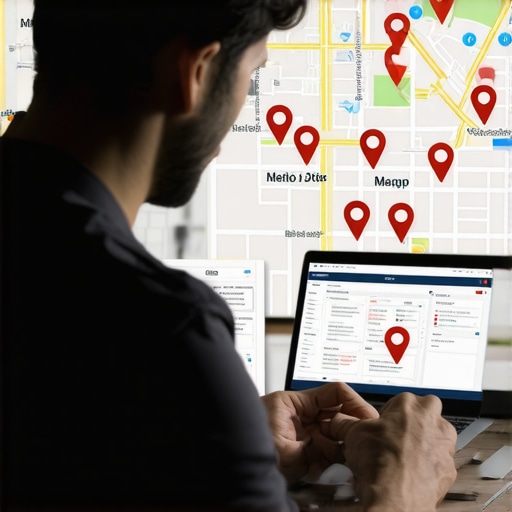
Make Your Map Pin Stick to the Right Neighborhoods
After your data is clean, you need to focus on relevance. Google doesn’t just want to know where you are; it wants to know exactly which neighborhoods you serve. This is where most Detroit SEO strategies fall apart. If you are a plumber based in Royal Oak, but you want calls from Birmingham and Troy, you have to prove to Google that you actually drive there. I started implementing advanced local audit moves that include checking local service area settings and geographic keywords. If you don’t do this, you’ll find that your map pin starts drifting into other neighborhoods where you don’t even have customers, or worse, it disappears as soon as someone drives past the next major intersection.
Build Authority That Actually Moves the Needle
Don’t just chase every directory on the planet. Focus on the ones that Google trusts for our specific region. There are citations that actually help your rankings and there are others that are just spam. Think of it like this: a recommendation from the Detroit Regional Chamber of Commerce is worth a thousand mentions on a ‘top business’ list based in another country. I’ve seen businesses jump three spots in the map pack just by getting their data mirrored correctly on three or four high-authority Michigan sites. It’s about quality over quantity every single time. When I finally got my own citations in order, the ‘data conflict’ flags disappeared from my dashboard, and for the first time in months, I saw my business show up for searches in areas I previously couldn’t touch. It wasn’t magic; it was just removing the friction that was stopping Google from recommending me.
But here is where most people get it wrong: they think once the citations are clean, the job is over. I see this every day in the Detroit suburbs—business owners who have ‘perfect’ profiles on paper but still can’t crack the top three for their most valuable keywords. Most ‘gurus’ will tell you to just go out and get as many five-star reviews as possible. They say the number is the only thing that matters. I’m here to tell you that is a dangerous oversimplification. In fact, the brutal truth about why your michigan competitors rank higher with fewer reviews often comes down to review velocity and the specific keywords your customers are using in their feedback. If you get 50 reviews in one week and then nothing for six months, Google sees that as unnatural. They want a steady heartbeat of engagement, not a sudden spike.
Why 500 reviews might still leave you on page three
It is not just about the star rating anymore. According to the Whitespark Local Search Ranking Factors study, the presence of relevant keywords in the text of your reviews is now a significant driver for local rankings. If you are a mechanic in Dearborn, a review that says ‘great service’ is okay, but a review that says ‘the best brake repair in Dearborn’ is gold. This is the hidden friction point stopping your michigan customers from leaving reviews that actually help you rank. You have to guide them subtly. I always tell my clients to ask for feedback on specific services. It is a nuance that separates the pros from the amateurs in Detroit SEO. Have you ever fallen into this trap of chasing quantity over quality? Let me know in the comments.
The tempting name-change trap that gets profiles killed
There is a massive ‘oops’ factor I see all the time. People get desperate and start adding keywords to their actual business name on Google. They change ‘Smith & Sons’ to ‘Smith & Sons Detroit Plumbers & Emergency Drain Cleaning.’ In the short term, you might see a ranking boost because Google’s algorithm is heavily weighted toward business names. But in the long term, you are begging for a suspension. These are common michigan business profile errors that result in instant suspension, and once Google flags you, getting back in their good graces is a nightmare. I’ve seen businesses lose 90% of their leads overnight because they tried to ‘hack’ the name field. It’s much safer to build authority through google business profile tips for 2026 that focus on long-term signals like local schema and high-quality photos.
Does Google actually care where you are standing?
This is a sophisticated question I get from owners who track their rankings. They notice they are #1 when they are in their office, but #8 when they are at the grocery store down the street. Many people believe you just need ‘more SEO’ to fix this, but the truth is about the ‘Possum’ filter. Google often filters out businesses that are physically close to each other to provide variety to the user. If you are in a building with three other lawyers, you might be getting filtered out not because your SEO is bad, but because Google thinks one lawyer from that address is enough. You have to learn how to stop google from filtering your michigan business out of local results by differentiating your service categories and building unique local signals that your neighbors don’t have. 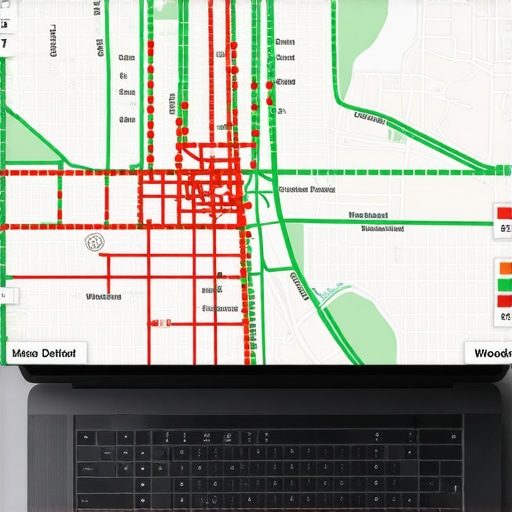
Maintaining a top-tier Michigan local SEO strategy feels a lot like keeping a classic car running during a Metro Detroit winter; if you ignore the salt and the slush for a month, the rust starts to set in. I’ve seen too many business owners spend thousands to hit the top three, only to stop everything once they arrive. Then, three months later, they are calling me wondering why their Detroit ranking dropped suddenly. The algorithm is a living thing. Your competitors are constantly tweaking their profiles, and Google is constantly refining what it thinks a ‘good’ local business looks like. If you aren’t moving forward, you are technically moving backward.
Stop Guessing Where Your Map Pin Actually Shows Up
The biggest mistake I made early on was trusting my own phone. I’d stand in my office, search for my service, see myself at #1, and feel like a king. But as soon as I drove toward the Lodge or headed out to Novi, I was nowhere to be found. This is why I started using specific Detroit SEO tools that provide a grid-based view of rankings. I personally use Local Falcon because it gives me a heatmap of exactly where my visibility dies. It’s one of the best local SEO tools for Michigan small businesses because it stops you from being fooled by your own location settings. When you see a sea of red dots just three blocks away, you know exactly where you need to focus your next round of neighborhood-specific content.
How do I keep my rankings from tanking next month?
Maintenance is about consistency, not intensity. You don’t need to spend ten hours a week on this. You need twenty minutes of ‘high-value’ activity. This means responding to every review—even the neutral ones—and posting at least one high-quality photo of your team working in the field every week. According to research by Sterling Sky, proximity is the most stubborn ranking factor, but high engagement signals can actually help stretch your ‘reach’ into adjacent zip codes. You should also be using real metrics like phone calls and direction requests instead of just looking at where your name appears in a search. 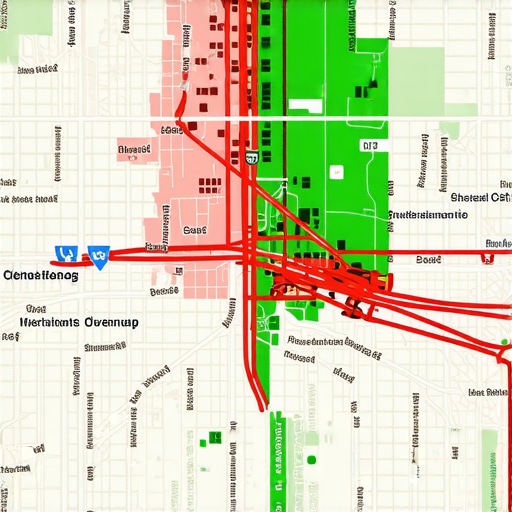
Scale Your Presence Across the County Line
Once you’ve locked down your immediate neighborhood, the next step is expansion. You don’t need to open a second shop in Livonia just to rank there. I’ve helped dozens of tradesmen use practical ways to scale Michigan local SEO by building out location-specific pages on their website that aren’t just ‘keyword stuffed’ trash. They need to provide actual value to someone in that specific city. If you don’t do this, you’ll find that your Google Business Profile gets filtered out the second a user searches from a different suburb. I predict that by 2026, Google’s AI will get even better at identifying ‘fake’ service areas, so the only way to stay ahead is to prove your local activity through real photos and geo-tagged updates. Start today by picking one neighborhood you currently serve but don’t rank in, and upload five photos of jobs you’ve done there directly to your profile. It’s the fastest way to signal to Google that you are more than just a pin on a map—you’re a part of the community.
The Hardest Truths I’ve Learned About Detroit SEO Success
After years of watching Michigan businesses climb and fall, I’ve realized that the most successful shops treat their digital presence like their physical storefront. You wouldn’t leave a pile of trash in front of your door in Ferndale, so don’t leave outdated info on your Google profile. Here are a few lightbulb moments I wish I had sooner:
- Proximity is a baseline, not a destiny. Just because you are the closest shop doesn’t mean you’ll rank. You have to prove you’re the best local option by staying active and relevant.
- Photos are better than keywords. A photo of your truck in front of a recognizable Detroit landmark tells Google more about your service area than fifty mentions of a zip code.
- Competitor spam is real. If you see a ‘business’ ranking ahead of you that is clearly a fake office or a lead-gen site, report it. Cleaning up the map helps your own rankings.
By focusing on these nuances, you can unlock Detroit SEO success that lasts longer than a single algorithm update. It’s about building a digital footprint that is as sturdy as a Ford axle.
The Only Toolkit You Need to Keep Your Phone Ringing
I don’t believe in overcomplicating things with a dozen different subscriptions. If you want to maintain your maps visibility in Michigan, these are the few resources I actually trust and use every week:
- Local Falcon: As I mentioned before, this is non-negotiable for seeing how your rank changes block-by-block. It removes the guesswork from your strategy.
- Canva: Use this to quickly watermark your job-site photos with your logo. It prevents competitors from stealing your work and builds brand trust instantly.
- Sterling Sky Blog: This is the gold standard for local SEO research. It’s where I go to see what’s changing before it hits the mainstream news.
If you’re feeling overwhelmed, remember that you don’t have to do it alone. However, if you decide to outsource, make sure you know the red flags to watch for before hiring a Michigan SEO agency so you don’t waste money on tactics that get you suspended.
#IMAGE_PLACE_HOLDER_E#
Your Neighborhood Is Waiting for You to Show Up
The digital landscape is shifting, and preparing your Detroit shop for the 2026 local search algorithm shift starts with the work you do today. You’ve got the skills and the service; now you just need to make sure the map reflects that reality. Don’t be afraid to experiment with your posts. Share the story of a difficult job you finished in Grosse Pointe or a new piece of equipment you’re using in Dearborn. These small, authentic actions compound into a massive competitive advantage. You are the local expert—it’s time for Google to treat you like one. Have you noticed a specific neighborhood where your map pin just won’t show up no matter what you try? Let me know in the comments below, and let’s troubleshoot it together.