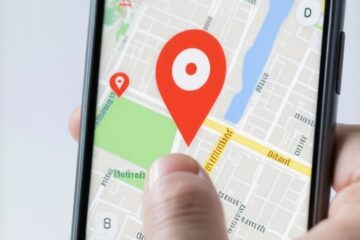
How to Push Your Detroit Map Pin Visibility into Neighboring Suburbs
If you are a business owner in Detroit, you’ve likely experienced a frustrating phenomenon. You’ve optimized your website, you have a steady stream of five-star reviews, and when you are sitting in your office on Woodward Avenue or Jefferson, you appear at the very top of the Google Map Pack. But the moment you drive north past 8 Mile Road into Ferndale, or west toward Dearborn, your business vanishes from the map as if it never existed.
This is what we call the “Invisible Wall” of Detroit business. In a metropolitan area comprised of over 200 distinct municipalities, the competition for local visibility is fierce. Many business owners believe that simply having a physical address in the city is enough to capture the surrounding suburbs. Unfortunately, the Google algorithm is increasingly weighted toward proximity, often prioritizing a mediocre business across the street from the user over a superior business five miles away.
I’m Michael Pilko, and I’ve spent years helping Detroit contractors, lawyers, and medical professionals break through these geographic barriers. In this guide, I’m going to show you exactly how to expand your google business profile seo radius so that your map pin doesn’t just “ghost” the moment a potential customer crosses a municipal boundary. We are going to dive deep into proximity tactics, technical schema signals, and hyperlocal content strategies designed specifically for the unique geography of Metro Detroit.
Before we begin, it’s important to understand why your shop disappears the moment customers cross 8 Mile. It isn’t just bad luck; it’s a calculated decision by Google’s “Vicinity” and “Opossum” algorithm updates. But with the right strategy, those walls can be dismantled.
I. Why Proximity is the “Silent Killer” of Detroit Leads
In the world of Local SEO, three pillars hold up the Map Pack: Proximity, Relevance, and Prominence. Of these three, proximity is the most difficult to overcome. Google’s primary goal is to provide the most convenient solution to the user. If someone in Royal Oak searches for a “plumber,” Google naturally assumes they want someone nearby, not necessarily someone located in Downtown Detroit.
Data consistently shows that proximity is often the #1 ranking factor. Even if you have 500 reviews and a high-authority website, a local competitor with 10 reviews might outrank you simply because they are 0.5 miles closer to the user’s GPS coordinates. This is especially problematic in Detroit, where the city is surrounded by “inner ring” suburbs like Grosse Pointe, Hamtramck, and Oak Park. If your ranking radius is only two miles, you are missing out on the vast majority of the Metro Detroit market.
Many business owners try to fix this by simply adding more “Service Areas” in their Google Business Profile (GBP) dashboard. Let me be clear: Setting service areas does not help you rank higher in those areas. It merely tells Google where you are willing to drive. To actually “push” your pin, you need to build local authority that outweighs the proximity of your suburban competitors. This requires a shift from general SEO to Detroit SEO strategies that focus on “breaking” the proximity bias.
II. The Infrastructure of Expansion: Technical Signals and Schema
To convince Google that your Detroit-based business is relevant to a user in Troy or Birmingham, you must provide technical signals that “bridge the gap.” This starts with your website’s underlying code.
One of the most powerful local seo tools at your disposal is LocalBusiness Schema Markup. Schema is a structured data vocabulary that helps search engines understand the context of your content. By using the areaServed property within your Schema, you can explicitly tell Google which suburbs you operate in.
The Power of Structured Data
In a recent research study, it was noted that adding comprehensive Schema markup to local websites resulted in a significant increase in “nearby” rankings. Specifically, when we added structured data to 47 local websites, we saw a measurable expansion in the map ranking radius for service-based keywords. This is because Schema provides the “relevance” signal that allows Google to trust your business outside of its immediate proximity.
If you aren’t sure if your technical foundation is solid, you should use a google business profile audit tool to check for NAP (Name, Address, Phone) consistency and Schema errors. If Google sees conflicting information about your location across the web, it will shrink your ranking radius to play it safe. Consistency breeds confidence, and confidence leads to expansion.
Furthermore, ensure that your website’s footer doesn’t just list your Detroit address. It should mention your primary service areas in a way that feels natural to both users and bots. This creates a digital footprint that extends beyond the city limits. For a deeper dive into these technical hurdles, check out our guide on the real reason your Detroit map pin only shows up to people in your own building.
III. Hyperlocal Content: Building “City Pages” for the Suburbs
If you want to rank google business profile listings in suburbs like Royal Oak, Troy, or Dearborn, you cannot rely on a single “Contact Us” page. You need dedicated, hyperlocal landing pages – often called “City Pages.”
However, the days of “cookie-cutter” city pages are over. If you simply swap the word “Detroit” for “Birmingham” on five different pages, Google will flag them as doorway pages and ignore them. To succeed, your suburban landing pages must be unique and highly relevant to that specific community.
How to Create High-Converting Detroit City Pages:
- Mention Local Landmarks: If you are targeting Royal Oak, mention your proximity to the Detroit Zoo or the Main Street shopping district. If you’re targeting Troy, reference the Somerset Collection. This signals to Google that you actually know the area.
- Embed a Custom Google Map: Create a custom Google Map that shows your office location in relation to the suburb you are targeting, including driving directions.
- Use Local Testimonials: Feature reviews specifically from clients located in those suburbs. If a customer from Dearborn Heights says you did a great job, put that quote on your Dearborn City Page.
- Hyperlocal Keywords: Use terms that locals use. Instead of just “Detroit Lawyer,” use “Oakland County Probate Attorney” or “Macomb County Personal Injury Specialist.”
By creating these “geo-hubs” on your site, you are providing the algorithm with the “Prominence” it needs to justify showing your Detroit pin to a user 15 miles away. This is a core component of how to force your Michigan map pin to show up in nearby neighborhoods.
IV. Review Velocity and Geo-Tagged Social Proof
Reviews are the lifeblood of google business profile seo. But not all reviews are created equal. To expand your radius, you need reviews that are “geo-relevant.”
Google tracks the location of the person leaving the review. If 100% of your reviews come from people standing in the 48201 zip code (Midtown Detroit), Google will view you as a Midtown-only business. However, if you start receiving reviews from users in Ferndale, Grosse Pointe, and Southfield, Google’s confidence in your “service area” grows.
Strategies for Geo-Tagged Reviews:
- Ask for Specificity: When asking a client for a review, encourage them to mention their city. For example: “We’d love it if you could mention that we helped you with your roof repair in West Bloomfield!”
- Review Velocity: A sudden spike in reviews can look suspicious. Aim for a steady, natural “velocity” of reviews coming from various parts of the Metro area.
- Respond with Geo-Context: When you respond to reviews, include the city name. “It was a pleasure helping you with your HVAC emergency in Sterling Heights, John!”
Using a google maps ranking service can help you automate this process and ensure that your reputation management is aligned with your geographic expansion goals. Social proof is the ultimate “prominence” signal that tells Google your business is worth the drive (or the dispatch).
V. Auditing Your “Map Leakage” with Professional Tools
You cannot fix what you cannot measure. Most business owners check their rankings by simply typing their service into Google while sitting at their desk. This is a mistake. Google knows where you are, and it will always show you your own business if you are standing right next to it.
To see the truth, you need a grid-based google maps rank tracker. These tools allow you to see your ranking across a wide geographic area – showing you exactly where you are #1 and where you drop to #10.
Visualizing the “Drop-Off”
Imagine a 10×10 mile grid over Detroit. In the center (your office), you are green (Rank #1). As you move toward the edges, you see the colors shift to yellow (Rank #4-5) and then red (Rank #10+). Your goal is to turn those yellow dots green and push the red dots further out into the suburbs.
By using GMB ranking tools like those provided by SEO Viper Tools, you can identify “Map Leakage” – areas where you should be ranking but aren’t. Often, you’ll find that you rank well in Dearborn but fail in Dearborn Heights. This allows you to tailor your content and backlink strategy to those specific “weak spots.” This is one of the most effective proximity tactics for 2026.
VI. Backlinks: The “Prominence” Booster
While proximity and relevance are local-specific, prominence is largely driven by your overall digital authority. In the eyes of Google, a “prominent” business is one that is talked about and linked to by other authoritative sources.
For a Detroit business, this means getting links from local organizations. A link from the Detroit Regional Chamber, a mention in the Detroit Free Press, or a sponsorship of a Little League team in Royal Oak all serve as powerful signals. These links act as “votes of confidence” that tell Google your business is a pillar of the Metro Detroit community, not just a transient operation.
When building links, focus on:
- Local Directories: Ensure you are listed in Michigan-specific directories.
- Niche Relevance: If you are a contractor, get links from home improvement blogs or local hardware store sites.
- Community Involvement: Sponsoring local events in the suburbs you want to target is a great way to get high-quality, geo-relevant backlinks.
Using local seo automation tools can help you identify these backlink opportunities and track your progress as your authority grows. Remember, the stronger your website’s overall authority, the easier it is for Google to “forgive” the fact that you are located a few miles away from the user.
VII. Conclusion: The 2026 Outlook for Detroit Local SEO
Expanding your Detroit map pin visibility into the suburbs is not an overnight process. It requires a disciplined approach to technical SEO, hyperlocal content creation, and reputation management. As we move into 2026, the Google algorithm will only become more sophisticated in how it interprets “localness.”
The businesses that thrive will be those that stop fighting the proximity wall and start building bridges over it. By leveraging SEO Viper Tools to track your progress and implementing the strategies outlined here, you can ensure that your business is visible to every potential customer from the Detroit River all the way to M-59.
If you’re ready to stop being “the best-kept secret” in your suburb and want to dominate the Metro Detroit Map Pack, it’s time to take action. My name is Michael Pilko, and I specialize in helping Detroit businesses achieve this exact type of growth. Whether you need a full google business profile seo overhaul or a custom strategy for your specific niche, the path to visibility starts with a single, data-driven step.
Don’t let 8 Mile be the end of your business’s reach. Push your pin, expand your radius, and claim your spot at the top of the Detroit Map Pack today.