The Map Tactics That Help Detroit Shops Steal Clicks from Big Brands
In the rugged competitive landscape of the Motor City, small business owners often feel like they are bringing a wrench to a tank fight. When you are a local plumber in Corktown or an HVAC specialist in Midtown, seeing a national franchise with a multi-million dollar ad budget sitting at the top of the search results is demoralizing. However, as someone who has spent years as a Platinum Google Business Profile Product Expert and a relentless GMB spam fighter, I’m here to tell you: the “big guys” have a massive weakness. That weakness is their lack of local soul, and we are going to exploit it using advanced google business profile seo.
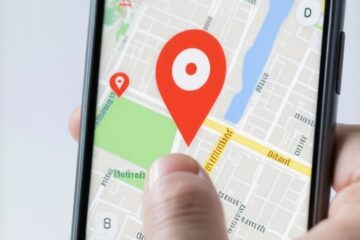
The digital “David vs. Goliath” battle in Detroit isn’t won on TV spots or radio jingles; it’s won in the three-inch square of the Google Map Pack. Research, including notable studies by Chaz Edward, has shown that businesses focusing on hyper-local Map Pack strategies can see a 1,063% average click growth. This isn’t just about showing up; it’s about stealing the clicks that the corporate giants think they own. To rank google business profile listings effectively in a city as geographically distinct as Detroit, you need to understand that the algorithm treats a search in Brush Park very differently than a search in Indian Village.
The Proximity Myth: Why Your Shop Disappears at 8 Mile
One of the most common complaints I hear from Detroit business owners is the “disappearing act.” You might be ranking #1 for your primary keywords while sitting in your office in Royal Oak, but the moment a potential customer crosses 8 Mile into the city, your business vanishes from the map. This is known as the proximity filter, a core component of the “proximity, relevance, and prominence” trio that governs local search.
Google’s algorithm is designed to provide the most “convenient” answer. However, convenience is subjective. If you haven’t established deep relevance within specific Detroit neighborhoods, Google assumes you aren’t the best fit for a Detroiter. This is why many shops find that your shop disappears the moment customers cross 8 Mile. It isn’t just about distance; it’s about a lack of localized data points that prove you serve that specific side of the line.
To rank higher on google maps, you have to break the “proximity paradox.” This involves expanding your “relevance radius” so that Google trusts your business’s ability to serve a wider area. If you’ve noticed that your shop disappears from the map when you cross Woodward Avenue, it’s a sign that your profile is too heavily anchored to a single coordinate. You need to signal to the algorithm that your service area is fluid and your expertise is recognized across the city’s various districts, from the North End to Southwest.
The “Project Page” Strategy: Proving Local Relevance
If you want to beat a national chain, you have to do something they physically cannot: prove you were actually there. A national franchise might have a landing page for “Detroit,” but they don’t have a page dedicated to a water heater installation on a specific block in Eastern Market. This is where the “Project Page” strategy comes into play.
A Project Page is a hyper-local case study. Instead of a generic “Services” page, you create pages on your website that showcase real work in specific Detroit neighborhoods. For example, “Emergency Boiler Repair in Historic Boston-Edison.” These pages should include:
- A detailed description of the problem and the Detroit-specific solution (e.g., dealing with older plumbing in historic homes).
- Original, geo-tagged photos of the job site.
- Mentions of local landmarks or nearby streets (e.g., “just three blocks from the Fisher Building”).
- A customer testimonial from that specific neighborhood.
Creating these pages is a high-level google business profile optimization tactic. When Google’s crawlers see this specific, localized content linked to your profile, your “relevance” score sky-rockets. You aren’t just a plumber in Michigan; you are the plumber who knows the specific pipe configurations of Midtown lofts. To manage these complex signals and track how your rankings fluctuate block-by-block, many pros use local seo tools to identify where the relevance gap is widest and where a new Project Page could flip a ranking from #10 to #1.
Social Stacking and Review Velocity: The 2026 Shift
As we move into 2026, the local search algorithm has undergone a significant shift. Google is no longer just looking at your profile and your website; it is “stacking” signals from across the web, particularly social media. We are now seeing Google Maps pull social media posts – Instagram photos, Facebook updates, and even TikToks – directly into the “Updates” and “About” sections of a Google Business Profile.
But the real “secret sauce” for 2026 is Review Velocity. Most business owners focus on the total number of reviews. They think, “If I have 500 reviews and my competitor has 400, I win.” As a former spam fighter, I can tell you that Google is smarter than that. They are looking at the consistency and recency of your reviews. A business that gets three high-quality, descriptive reviews every week is seen as more “alive” and relevant than a business that bought 200 reviews three years ago and has been silent since.
When seeking reviews, encourage your Detroit customers to mention their neighborhood and the specific service they received. A review that says, “Best HVAC service in West Village, they fixed my furnace in the middle of a January blizzard,” is worth ten reviews that just say, “Good job.” To stay ahead of the curve, utilizing a professional gmb ranking service can help you automate the monitoring of these signals and ensure your review velocity remains steady without triggering spam filters. Authentic, geo-tagged photos uploaded by customers are the gold standard here – they are nearly impossible for corporate chains to fake at scale.
Beating the Chains in the 2026 AI-Voice Search Era
The way Detroiters find your shop is changing. With the rise of AI-driven voice search – Siri, Alexa, and Google Assistant – searches are becoming more conversational. People aren’t typing “Plumber Detroit” as much as they are asking, “Hey Google, find a Black-owned plumber near me that’s open now and handles copper pipe leaks.”
The “2026 Google Maps Update” heavily favors businesses that have a 100% complete profile, particularly the “Services” menu and “Q&A” sections. National chains often have “locked” profiles managed by a corporate office in another state. They rarely take the time to fill out the granular attributes that matter to locals. This is your opening.
You should use a google business profile optimization approach that treats your profile like a mini-website. Fill out every attribute available: “Veteran-led,” “Wheelchair accessible,” “Identifies as women-owned.” Use the Q&A section to answer common Detroit-specific questions, such as, “Do you offer 24/7 service during snow emergencies?” or “Are you familiar with the Detroit Technology Grant Fund for small businesses?”
To ensure you aren’t missing any of these critical AI-triggers, it is wise to employ a google maps ranking service that can audit your profile against the latest AI-voice search requirements. These systems favor businesses with complete data sets because they provide the “safest” and most accurate answer to a voice query. If Google Assistant is 99% sure you fix “steam radiators in old Palmer Woods homes” because you listed it in your Services menu, you will get the call over the national chain that just lists “General Plumbing.”
Technical Checklist for Detroit Dominance
Ranking in a city with as much “noise” as Detroit requires technical precision. You can’t just “set it and forget it.” To maintain your lead over the corporate giants, follow this technical checklist:
- NAP Consistency: Ensure your Name, Address, and Phone number are identical across every directory. Even a “St.” vs. “Street” discrepancy can sometimes dilute your ranking power in high-competition areas.
- Hyper-local Schema Markup: Use LocalBusiness Schema on your website, specifically using the
hasMapandgeocoordinates properties to anchor your site to your Detroit location. - Frequency of Posts: Use the Google Business Profile “Posts” feature at least twice weekly. Share local news, project updates, or Detroit-specific offers. This signals to Google that your business is active.
- Zip Code Tracking: Don’t just track “Detroit.” Use local seo software to track your rankings across different zip codes (48201, 48216, 48226, etc.). This will show you exactly where your “relevance” ends so you can target your next Project Page accordingly.
For more specific tactics on the Michigan market, check out our guide on 7 Michigan Local SEO Wins to Outrank Corporate Chains in 2026. The goal is to build a “moat” of local data around your business that no amount of corporate ad spend can penetrate.
Conclusion: Reclaiming the Map Pack
The beauty of the Google Maps algorithm is that it still values the “local” in Local SEO. While big brands have the budget, you have the proximity and the specific community knowledge that Google craves for its users. By implementing neighborhood-specific Project Pages, maintaining a healthy review velocity, and optimizing for the 2026 AI-voice search era, you can rank in the google map pack and stay there.
You don’t need a corporate headquarters to dominate the search results in Detroit. You just need to be more “Detroit” than your competition. Start by auditing your current presence, cleaning up any technical errors, and proving to Google that you are the undisputed expert in your corner of the city. If you’re ready to take the next step and truly rank google business profile listings to their maximum potential, the tools and strategies are at your fingertips. Let’s get to work and show the big brands who really runs the D.